
What Nova Scotia's building permit process actually involves, and why it protects you
Permits feel like bureaucracy, and partly they are. But they exist for a specific reason that matters to you, and the process is more manageable than the anxiety around it suggests.
September 13, 2026 · Tom Ross
Building permits make people anxious. The process feels opaque, the forms look official, and the whole thing carries a vague threat of delay and expense. So a fair number of homeowners quietly hope a project can slip under the radar without one.
It is worth slowing down on that instinct, because permits exist for a reason that genuinely benefits you, and the process is more manageable than its reputation. Here is what actually happens, why it is on your side, and where the real risk lies, which is not where most people think.
What permits are for, and why it matters to you specifically
A permit is not really about the piece of paper. It is about the inspections the paper triggers.
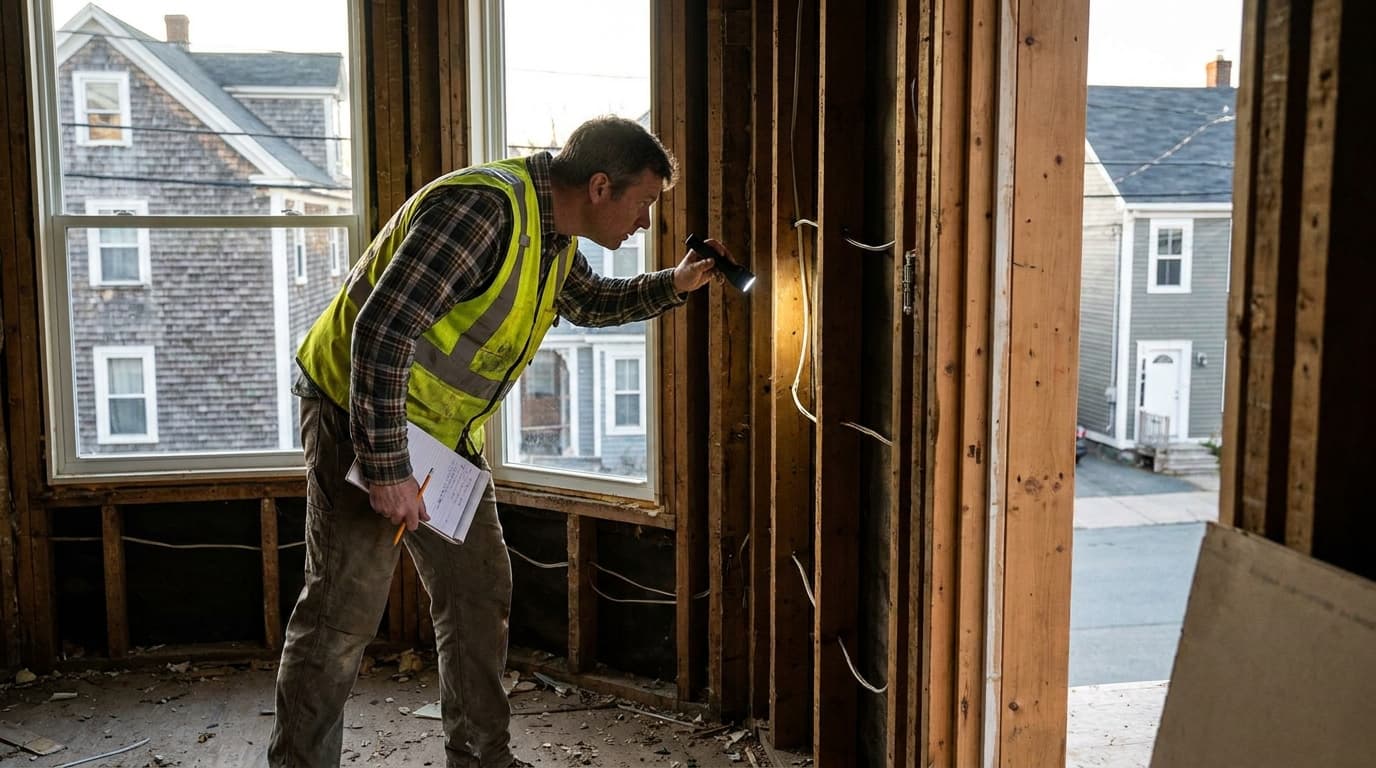
When you pull a permit, your project gets inspected at key stages by someone whose job is to catch problems before they are sealed up inside walls, under floors, or behind finishes. That is the whole point. A wiring fault, an undersized beam, a drain that was not vented properly, these are exactly the things you cannot see once the drywall is up, and exactly the things that cause a fire, a flood, or a structural failure years later. Without the inspection, the first time anyone notices is when it goes wrong, or when a home inspector finds it as you are trying to sell.
The permit, in other words, is the mechanism that puts a second set of qualified eyes on the work that you will never be able to check yourself.
What the HRM permit process involves step by step
The sequence is more straightforward than the dread around it.
You apply to HRM's development approvals, online or in person. You submit plans and specifications for the work. There is a fee, generally based on the value of the project. The permit is then issued, or you are asked for revisions if something does not meet code. As the work proceeds, inspections happen at the required stages, and at the end there is a final sign-off. For work involving electrical, plumbing, or mechanical systems, there are usually sub-permits for those trades, which your contractor typically handles.
That is the shape of it. Apply, submit plans, pay, build with inspections along the way, sign off at the end.
How long it takes and what can slow it down
Timelines are more reasonable than people fear, with some predictable exceptions.
A simple residential permit often comes through in roughly ten to twenty business days. More complex projects take longer, and anything in a heritage area can take longer still, because there are additional considerations layered on top. What slows things down is usually within your control: an incomplete application, or plans that do not comply and have to be reworked. What speeds things up is hiring a contractor who knows HRM's process, submits complete and compliant paperwork the first time, and has done this often enough to anticipate the questions.
What your contractor should be handling versus what falls to you
For most renovations, the permit is the contractor's job, not yours.
A reputable contractor pulls the permit, often in their own name, and manages the inspection process as part of the work. Your role is usually limited to being available for access and decisions. The important move is to settle this before work begins. Ask directly: are you pulling the permit, and is it included in the price? You want the answer to be a clear yes, in writing, rather than a vague reassurance that you can sort it out later.
What unpermitted work means for your home's future
This is the part that turns a small saving into a real liability.
Unpermitted work follows the house. When you sell, it can surface during the buyer's inspection or their lawyer's due diligence, and then it becomes a negotiation you are on the losing side of, legalising the work after the fact, dropping your price, or watching a deal wobble. It can complicate insurance, since an insurer may resist a claim tied to work that was never approved. And it leaves you carrying liability for work no one ever checked.
None of this is meant to alarm you. It is meant to reframe the permit from an obstacle into what it actually is, the cheapest insurance you will buy on the whole project. The contractors we list across HRM handle permits and inspections as a matter of routine, so if you would rather not navigate it yourself, you can start from people who already treat it as part of the job.
Need a tradesperson you can trust?
Every business on ProveAPro has been hand-vetted. Government ID, business registration, insurance, licensing, references, and complaints history - all checked before they go live.
Browse vetted tradespeople