
Home renovation scams in Nova Scotia: how to spot them and what to do
Renovation scams in Nova Scotia follow recognisable patterns. Understanding them in advance is the best protection. Here are the common ones, the red flags, and where to report a problem.
October 4, 2026 · Tom Ross
Renovation scams in Nova Scotia are not random. They follow recognisable patterns, the same handful of scripts repeated on doorstep after doorstep, and once you can see the pattern it loses most of its power. The best protection is not suspicion of everyone, it is knowing in advance what the genuine warning signs look like so you can act calmly when one appears.
This is a practical guide rather than a scare piece. It covers the common scams, how to handle the doorstep approach, where to report a problem in Nova Scotia, and the simple steps that keep you safe in the first place.
The most common scam patterns in Nova Scotia
A few patterns account for most of the trouble.
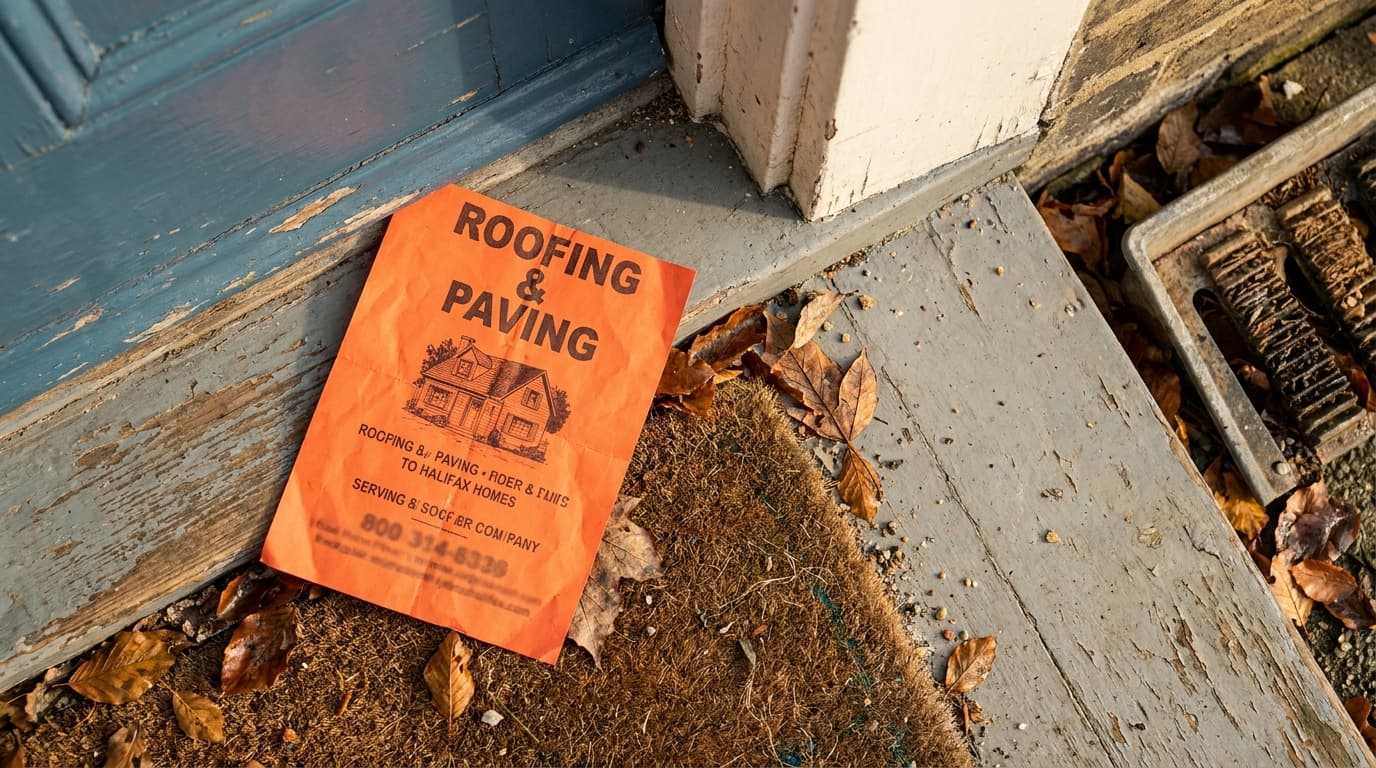
There is the door-to-door approach with built-in urgency, the classic being some version of "I was just working on your neighbour's roof and noticed yours needs attention." There are advance-payment scams, where a large deposit is taken and the contractor is never seen again. There is unlicensed work billed as if it were licensed, where you pay for a qualified trade and get someone who is not. And there is inflated emergency pricing, where a storm or a flood creates panic and someone charges three times the fair rate because they know you are desperate. Recognising these four covers most of what actually happens here.
Door-to-door solicitation: how to handle it
The doorstep is where most of these begin, and you have more control than the pressure suggests.
You are under no obligation to engage at all. It is worth knowing that legitimate, busy tradespeople rarely need to canvass door to door for work. If you are genuinely interested, there is no harm in taking a business card and a day to think, and a real business will be fine with that. What you never do is agree to work starting the same day. And you can verify someone on the spot with a single question: ask for their Nova Scotia business registration number. Someone running a real registered business can give it to you. Someone who cannot, or who bristles at being asked, has answered a different and more useful question.
The red flags worth knowing
A handful of signals are worth taking seriously, especially in combination.
- Cash only, with reluctance to provide a proper invoice
- No written contract
- No fixed business address
- Pressure to decide today
- Cannot name their insurer
- No permit mentioned for work that clearly requires one
- A request for a large percentage of the cost up front
One of these might have an innocent explanation. Several together is a pattern, and the pattern is the point. Trust it.
Where to report a contractor problem in Nova Scotia
If something goes wrong, you have somewhere to turn, and reporting helps protect the next person too.
Service Nova Scotia's consumer protection function handles consumer complaints about businesses. The Better Business Bureau serving Atlantic Canada is worth both checking before you hire and reporting to afterward. If what happened crosses into criminal fraud, that is a matter for the police, the RCMP or Halifax Regional Police depending on where you are. And if the problem involves a licensed trade, the relevant licensing body, such as the Nova Scotia Apprenticeship Agency for the regulated trades, is the place to raise it. Keep your paperwork, your contract, your payment records, and your messages, because a documented complaint carries far more weight than a recollection.
What proactive steps actually protect you
Most of this never touches you if you do a few simple things from the start.
Get a written contract before any work begins. Pay by a method that leaves a trail and offers some recourse, a credit card or a cheque rather than cash. Verify the licence before hiring for any regulated trade, and check the Better Business Bureau while you are at it. And never hand over more than a modest deposit, around ten to fifteen percent, on a large job, with the rest tied to milestones and a final payment held back until you are satisfied. None of this is difficult, and together it closes off almost every avenue these scams rely on.
The thread running through all of it is verification before trust, which is exactly the principle we built on. Every tradesperson listed with us is tied to a verifiable Nova Scotia business registration, with their identity, insurance, licensing, and references checked before they appear. It does not replace your own good judgement on the doorstep, but it does mean you can start from people who have already proven they are who they say they are.
Need a tradesperson you can trust?
Every business on ProveAPro has been hand-vetted. Government ID, business registration, insurance, licensing, references, and complaints history - all checked before they go live.
Browse vetted tradespeople