
The Halifax homeowner's guide to hiring a roofer
Salt air, ice damming, post-tropical storms, and steep Victorian pitches make Halifax roofing its own thing. Here is how to hire well and spot the storm-chasers.
June 28, 2026 · Tom Ross
A roof is one of the higher-stakes hires you will make as a Halifax homeowner. When it goes well, you stop thinking about it for twenty years. When it goes badly, the consequences are not subtle: water finds its way in, mould follows, and what started as a roofing problem becomes a structural and insurance problem.
Roofing also attracts more than its share of bad actors, partly because the work is hard to inspect from the ground and partly because our storm seasons bring transient crews to town. So it pays to know what good looks like here specifically. Halifax roofing is not the same as roofing anywhere else.
Halifax roofing, what makes it different from other markets
Our conditions are particular, and they shape what a good roof needs.
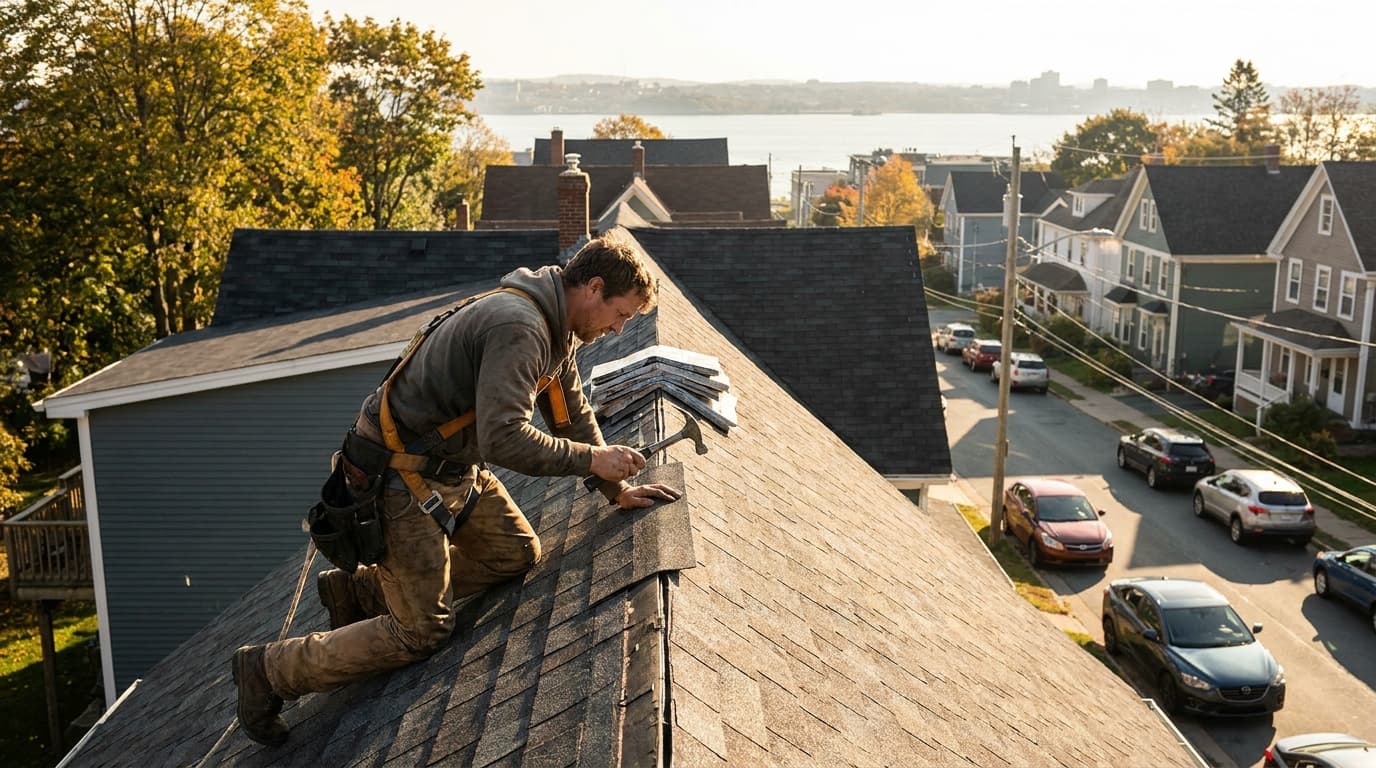
Ice damming is a real issue on older peninsula homes, where heat escaping into the attic melts snow that then refreezes at the eaves and forces water back up under the shingles. Salt air, especially closer to the coast, corrodes metal flashings faster than inland air does, so the quality of the metalwork matters more here. Post-tropical storm remnants arrive most autumns and test every weak point on a roof at once. And the older housing stock comes with complex, steep pitches that are slower and more dangerous to work on, which a competent roofer prices accordingly.
A roofer who knows Halifax will raise these things before you do. One who treats your peninsula Victorian like a flat suburban bungalow has told you something.
Permits, when you need one and what happens if you skip it
In HRM, a complete re-roof generally requires a building permit. That means the work is expected to meet the Nova Scotia Building Code and may be subject to inspection, which is there to protect you, not to create paperwork for its own sake.
Skipping the permit can feel like saving time and money. It is not. Unpermitted structural work has a way of surfacing at the worst moment, usually when you sell. A home inspector or the buyer's lawyer flags it, and suddenly you are legalising work after the fact or knocking money off your price. A roofer who waves away a permit that the job requires is making your future problem in order to simplify their present.
How to read a roofing quote
A quote you can trust is itemised, so you can see what you are actually buying. Look for these lines spelled out:
- Tear-off of the old roof and disposal of the waste
- Underlayment specification, not just "underlayment"
- Shingle brand, grade, and warranty class
- Drip edge and all flashing work
- Ventilation, which is what keeps the attic dry and prevents ice damming
Now the warning signs. A single lump sum with no breakdown. No mention of disposal, which is not free and has to happen. And no permit included where the job clearly needs one. A vague quote is not just hard to compare, it is where disputes come from later.
What a good warranty looks like, and what to watch for
There are two warranties on a roof, and people confuse them.
The manufacturer warranty covers the shingles themselves against defects. The workmanship warranty covers the roofer's installation. The second one is the one that protects you against a leak caused by how the roof was put on, and it is only as good as the roofer still being in business to honour it.
That is why how long they have operated in HRM matters. A workmanship warranty from a crew that vanishes after storm season is worth nothing. Ask how many years they have been roofing here, under this business name, and check that the name is a registered Nova Scotia business.
Storm-chasing crews, how to spot them
The pattern is predictable. A major storm hits HRM, roofs take damage, and within days crews you have never heard of are knocking on doors, often from out of province, pushing you to sign today before they "move on to the next street."
Some of them do competent work. Many do not, and either way you have no recourse once they have left. The signs are consistent: no local address, cash only, pressure to decide immediately, and an inability to produce Nova Scotia business registration when you ask for it. A legitimate local roofer is busy, registered, and in no rush to bully you into a same-day decision.
This is exactly the kind of risk we check before a roofer is listed with us: registration, insurance, licensing where relevant, references, and complaints history. If you would rather not vet a door-knocker yourself in the days after a storm, start from a shortlist of vetted roofers across HRM instead. Whoever you call, slow the decision down. A roof can wait a few days for you to choose well. It cannot easily be undone once it is on.
Need a tradesperson you can trust?
Every business on ProveAPro has been hand-vetted. Government ID, business registration, insurance, licensing, references, and complaints history - all checked before they go live.
Browse vetted tradespeople