
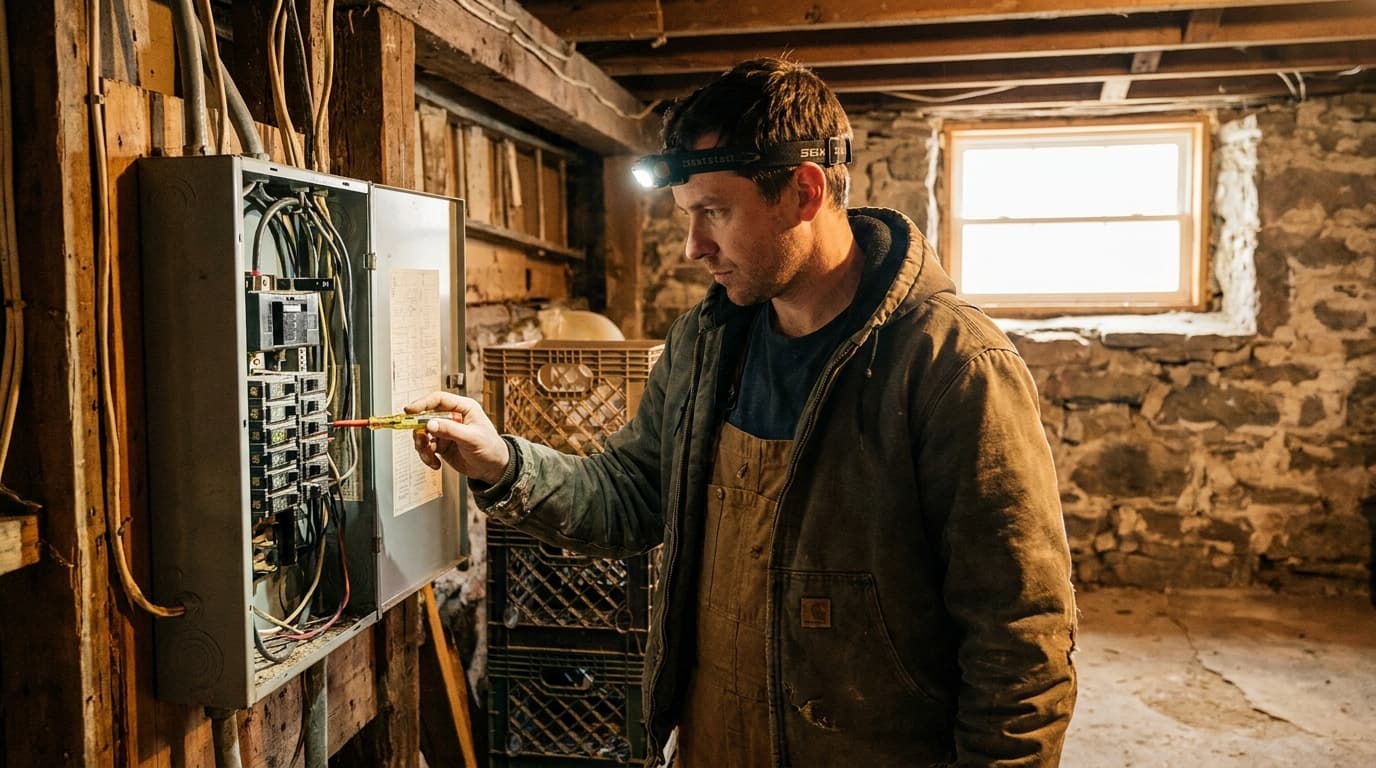
Electrical panel upgrades in Halifax: what homeowners need to know
Many Halifax homes have panels that are 30 to 50 years old, and insurers increasingly flag them. Here is how to tell if yours needs replacing, the brands and wiring that cause problems, what the process involves, and roughly what it costs.
July 19, 2026 · Tom Ross
A lot of Halifax homes are running on electrical panels that were installed thirty, forty, even fifty years ago. For years that was nobody's concern. Lately it has become one, partly because insurers are paying closer attention and partly because the way we use electricity at home has changed. A 60 or 100 amp service that was generous in 1975 is stretched thin by a modern household, and it is not even close to enough if you are adding a heat pump or an EV charger.
If an electrician or your insurer has raised the subject of your panel, or you simply suspect yours is past its prime, this is what you need to know. The aim here is to be clear about genuine risks without turning a normal piece of home maintenance into a crisis.
Signs your Halifax home might need a panel upgrade
A few signs are worth paying attention to, individually or together.
Breakers that trip often, lights that flicker when an appliance kicks in, or a panel that feels warm to the touch all suggest the system is working harder than it should. A persistent burning smell near the panel is a stop-everything-and-call-an-electrician sign. You might also be prompted by something you are adding rather than something going wrong: an EV charger, a heat pump, a hot tub, or a major renovation can all push an older panel past its comfortable capacity. And sometimes the prompt comes from your insurer asking pointed questions about the panel, the wiring, or the amperage at renewal.
There is also the simple question of capacity. Many older Halifax homes still run on a 60 amp or 100 amp service. For a modern home with electric heat, a heat pump, and an EV in the future, 100 amp is often the practical floor and 200 amp is increasingly the sensible target. None of these signs on its own means disaster, but together, or alongside an aging panel, they are a reasonable cue to have a licensed electrician take a proper look.
The brands and wiring that cause problems in older Halifax homes
A few specific things turn up repeatedly in our older housing stock, and they are worth knowing by name because insurers certainly know them.
Federal Pacific and Zinsco panels. These brands are over-represented in older Halifax peninsula homes and have well-documented reliability concerns. The worry is that their breakers may not trip reliably when they should, which is the one job a breaker exists to do. Because of that history, Nova Scotia insurers increasingly ask about these panels and sometimes require replacement as a condition of coverage. You can often identify the brand from the name on the panel door or the breakers inside.
Knob-and-tube wiring. The oldest Halifax homes may still have original knob-and-tube wiring lurking in the walls. Insurers frequently flag it, and it commonly comes to light during a panel upgrade. If your home has it, the panel may be only part of the conversation.
Aluminum branch wiring. Homes wired in a stretch of the 1960s and 1970s sometimes have aluminum wiring on branch circuits, which has its own connection issues and is another thing an insurer may ask about.
Finding any of these is not cause for panic, but it is a reason to talk to a licensed electrician sooner rather than later, especially around renewal time with your insurer, because the conversation is far cheaper than a declined policy.
What the upgrade process looks like from quote to inspection
People imagine a panel upgrade as more disruptive than it usually is. Here is the actual shape of it.
A licensed electrician assesses your service and quotes the work. An electrical permit is pulled, and the work is subject to inspection, which is not red tape, it is the confirmation that the thing protecting your home from fire was installed correctly. Nova Scotia Power is notified, because upgrading the panel typically means disconnecting and reconnecting your service, and in some cases upgrading the service mast, meter base, or the cable feeding the house. On the day, the electrician does the work, the inspection takes place, and power is restored. Most straightforward upgrades are a one to two day job.
The important word in all of that is licensed. A panel is exactly the kind of work where the licence, the permit, and the inspection matter most, both for safety and for your insurance, because work done by someone unlicensed can give your insurer grounds to push back on a future claim.
Nova Scotia Power: the connection process explained
The coordination with Nova Scotia Power sounds intimidating and is mostly handled for you.
Your electrician arranges the disconnection and reconnection with the utility. There is usually a short outage while the work is done, which the electrician will warn you about so you can plan around it, and occasionally a wait for the utility to schedule their part. The process is theirs to manage, not yours. Your part is small: be home for access, have the quote and paperwork to hand, and make sure the area around the panel is clear so they can work. If an electrician suggests doing this work without involving Nova Scotia Power, pulling a permit, or having it inspected, that is a serious red flag rather than a clever shortcut.
What a panel upgrade costs in HRM right now
Costs vary, so treat any figure as a starting point rather than a promise.
A typical upgrade, for example moving from a 100 amp to a 200 amp service, generally runs from a couple of thousand dollars into the four-thousand-and-up range once labour, the permit, and the inspection are included. The number moves with the panel size, the age and layout of the home, and whether the service entrance cable, mast, or meter base also needs upgrading, which is a common hidden cost in older houses. If knob-and-tube or aluminum wiring has to be addressed at the same time, that is additional work again, and it can change the budget significantly. Supply prices for electrical components have also been variable in recent years.
A reputable electrician will quote this in writing, with the permit and the Nova Scotia Power coordination accounted for, not as a vague cash figure scribbled on the back of an invoice. Because this is licensed work with real safety and insurance stakes, it is a poor place to shop on price alone. We list licensed electricians across HRM whose certification and insurance we have already verified, if you would rather start from people who are confirmed to do this work properly.
Need a tradesperson you can trust?
Every business on ProveAPro has been hand-vetted. Government ID, business registration, insurance, licensing, references, and complaints history - all checked before they go live.
Browse vetted tradespeople