
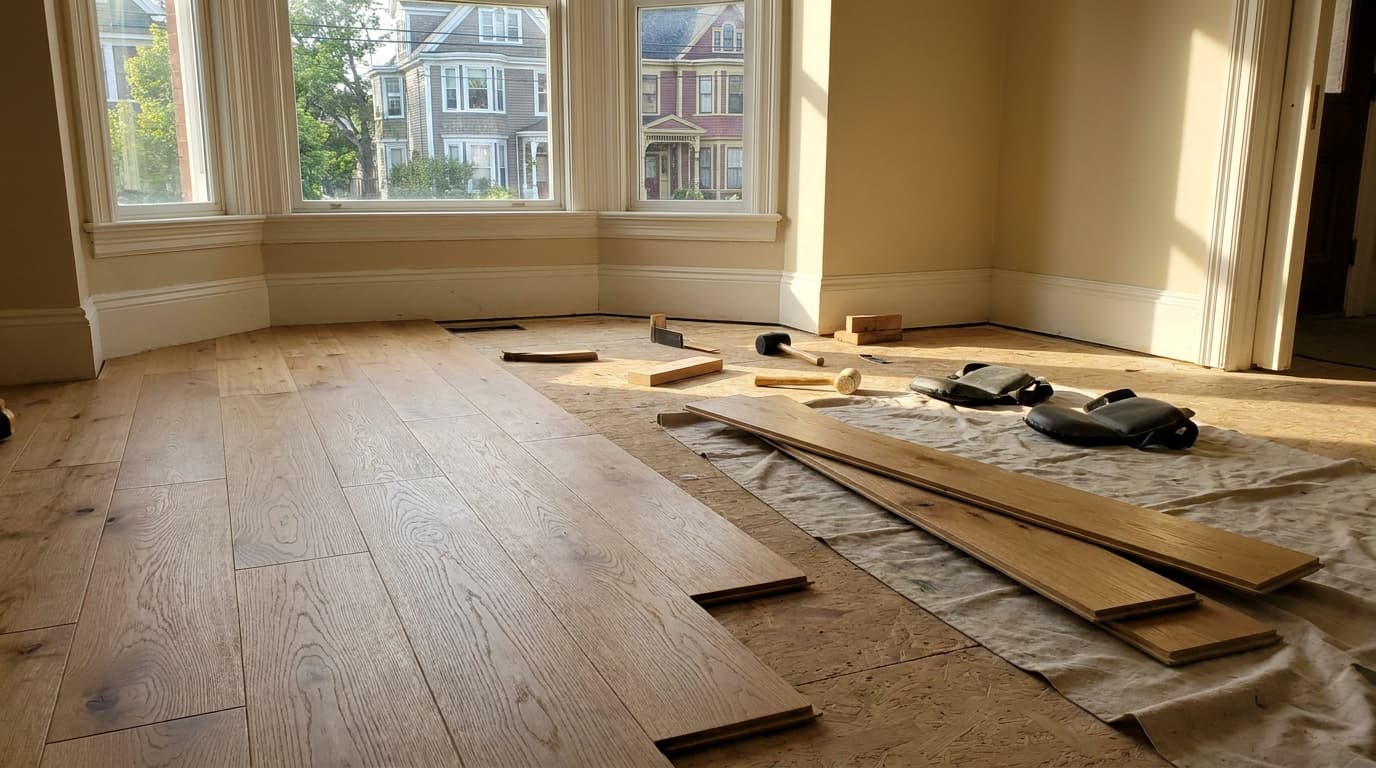
Flooring in Halifax homes: what works and what doesn't in our climate
Most flooring advice is written for dry, stable climates. Halifax is maritime, with big humidity swings, cold floors, and winter salt. That changes what actually works.
September 20, 2026 · Tom Ross
Most of the flooring advice you find online was written for a stable, dry climate, and Halifax is neither. We swing from humid summers to dry, heated winters, our floors run cold, and from October through April there is salt and grit tracked in from every door. All of that changes what flooring will actually hold up here, as opposed to what looks good in a showroom in a different climate.
So before you fall for a product because a national article rated it highly, it is worth thinking about how it will behave in a Halifax house specifically. Here is how the main options hold up in our conditions, and what to ask the person installing them.
Why Halifax's climate matters for flooring choices
Three local factors drive most flooring decisions here.
The first is humidity. Wood expands and contracts as moisture in the air rises and falls, and our seasonal swing is wide enough to matter for any solid wood product. The second is moisture from below, because Halifax basements and ground floors over them are often damper than flooring designed for dry slabs can tolerate. The third is winter wear: salt and grit are abrasive, and they grind away at finishes near entries far faster than they would in a drier place. Keep those three in mind and the rest of the choices follow logically.
Hardwood: where it works and where it doesn't in HRM homes
Solid hardwood is a wonderful floor in the right place, and a mistake in the wrong one.
In above-grade living areas with consistent heating, solid hardwood performs beautifully and lasts generations. Many older peninsula homes already have original hardwood under the carpet, and restoring it is very often a better choice than ripping it out, both for character and for cost. Where solid hardwood does not belong is anywhere with moisture: basements, or ground floors with any sub-floor dampness, where the seasonal movement and the moisture will cup and gap the boards over time. In those spots, engineered hardwood, which is more dimensionally stable, is the wiser version of the same look.
LVP and engineered flooring: the practical middle ground
Luxury vinyl plank has earned its popularity in maritime homes, and for good reasons rather than hype.
Good LVP is waterproof, dimensionally stable through our humidity swings, and warmer underfoot than tile, which is no small thing in a Halifax winter. That combination makes it a sensible choice for basements, entries, and busy family spaces. The catch is quality. Cheap LVP has a thin wear layer and a poor locking system, and it shows its age quickly under real traffic. When you are choosing, ask about the wear-layer thickness, the locking system, and the underlayment, because that is where the difference between a ten-year floor and a three-year one lives. Engineered hardwood occupies a similar middle ground when you want real wood with more tolerance for moisture.
Tile and stone: the right applications
Tile and stone are durable and waterproof, and cold, which is the whole story in our climate.
They are excellent in entries, bathrooms, and mudrooms, the places where waterproof and hard-wearing matter most. The coldness underfoot, real in a Halifax winter, is worth planning around: in-floor heating under tile in a main bathroom is a genuine comfort upgrade that is much easier to install during a renovation than to add later. Grout maintenance is the ongoing consideration, since grout stains and needs upkeep. Where tile is less ideal is across large living areas, unless it is heated, because few people want an expanse of cold, hard floor in the rooms they actually relax in through the winter.
What to ask your flooring installer before committing
Five questions separate an installer who knows our conditions from one who does not.
Have you installed this product in Halifax-area homes? Local experience means they have seen how it behaves here, not just on the box.
What is the acclimatisation requirement? Many products need to sit in the home for a period before installation so they adjust to its humidity. Skipping this is a common cause of gapping and buckling later.
What sub-floor preparation is included? A floor is only as flat and dry as what is under it, and prep is where shortcuts hide.
Do you handle the transitions and trim? The finishing details are what make a floor look professional rather than nearly done.
What is the warranty on your workmanship? The product warranty and the installation warranty are different, and you want both.
Get the product matched to the room and the installer who knows our climate, and a floor in Halifax can look after itself for years. We list vetted flooring installers across HRM whose work and credentials we have already checked, if you would rather start from people who have done this in homes like yours.
Need a tradesperson you can trust?
Every business on ProveAPro has been hand-vetted. Government ID, business registration, insurance, licensing, references, and complaints history - all checked before they go live.
Browse vetted tradespeople